Kubernetes Deployment Strategies That Avoid Downtime

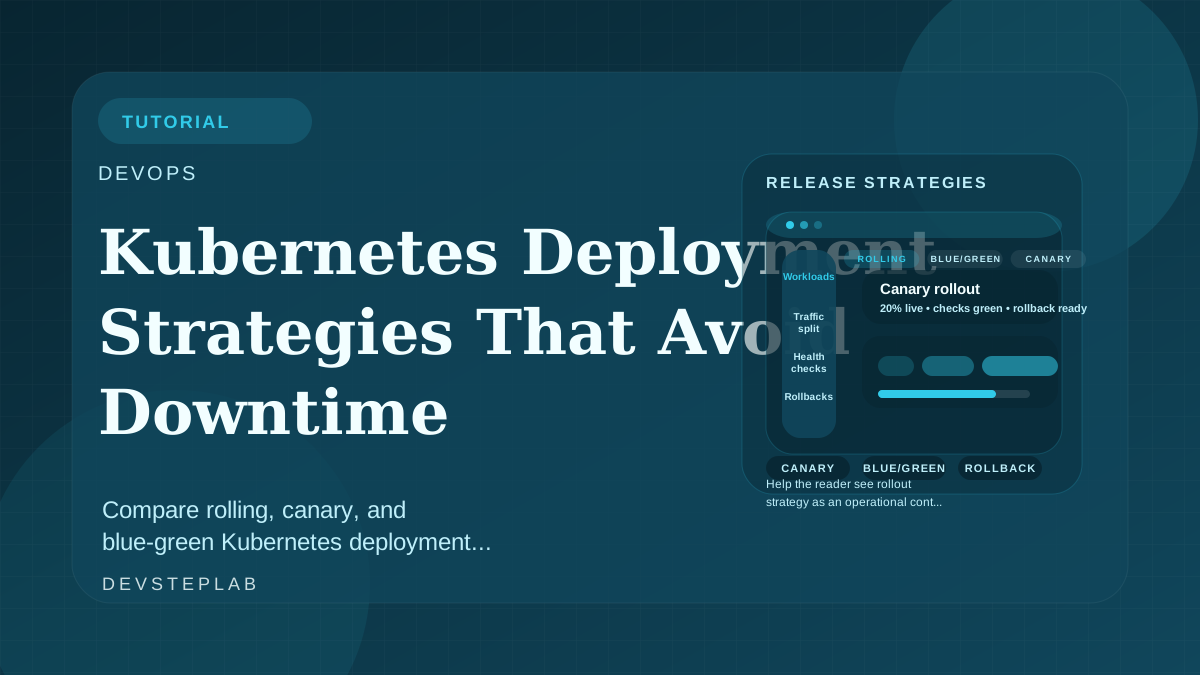
Compare rolling, canary, and blue-green Kubernetes deployment strategies so you can ship changes with less risk and clearer rollback paths.
Deployment strategy is really risk strategy. Kubernetes gives you the mechanics to roll out new versions, but it does not decide how much traffic should move, when rollback should happen, or which metrics actually matter.
This tutorial compares the main rollout patterns and shows where each one fits.
The right Kubernetes deployment strategy depends on rollback speed, traffic risk, observability, and how much duplication your platform can afford.
Rolling deployments are the baseline
Rolling updates replace pods gradually and work well when:
- the change is low risk
- startup and readiness checks are trustworthy
- the application is backward compatible during the rollout window
They are the simplest option, which is why they are often the right first choice. Simplicity is a feature in delivery systems.
Canary releases buy learning time
Canaries are valuable when you need evidence before exposing the full user base. Route a small portion of traffic to the new version and watch:
- error rate
- latency
- resource pressure
- conversion or task success metrics
That makes canaries a business decision as much as an infrastructure decision.
Blue-green releases buy clean rollback paths
Blue-green deployments keep the old and new environments separate, then switch traffic in one controlled move.
strategy:
  type: RollingUpdate
  rollingUpdate:
    maxUnavailable: 0
    maxSurge: 1
Even if your controller still uses a rolling primitive under the hood, the operational model can still be blue-green if traffic switching and rollback are isolated at the service or ingress layer.
Readiness matters more than the strategy label
Teams blame the rollout pattern when the real issue is weak health signaling. If readiness checks only prove the process is alive, Kubernetes will send traffic before the service is actually ready.
This also affects container work from Dockerizing a Node.js Application for Production. A weak image contract usually becomes a weak rollout contract later.
Choose based on blast radius
Use rolling when the change is routine. Use canary when you need evidence under live traffic. Use blue-green when rollback speed and isolation matter more than infrastructure efficiency.
The right strategy is the one that matches the failure cost of the change you are shipping.
Related next reads
Frequently Asked Questions
Is rolling deployment always the safest default?
It is usually the simplest default, but not always the safest. Stateful workloads, large schema changes, or risky feature shifts may need canary or blue-green rollout controls instead.
What makes a canary rollout useful instead of cosmetic?
A canary is useful only when you measure the right service and business signals, compare them to a baseline, and have a clear rollback trigger before full promotion.