Building a Design System with Tailwind CSS
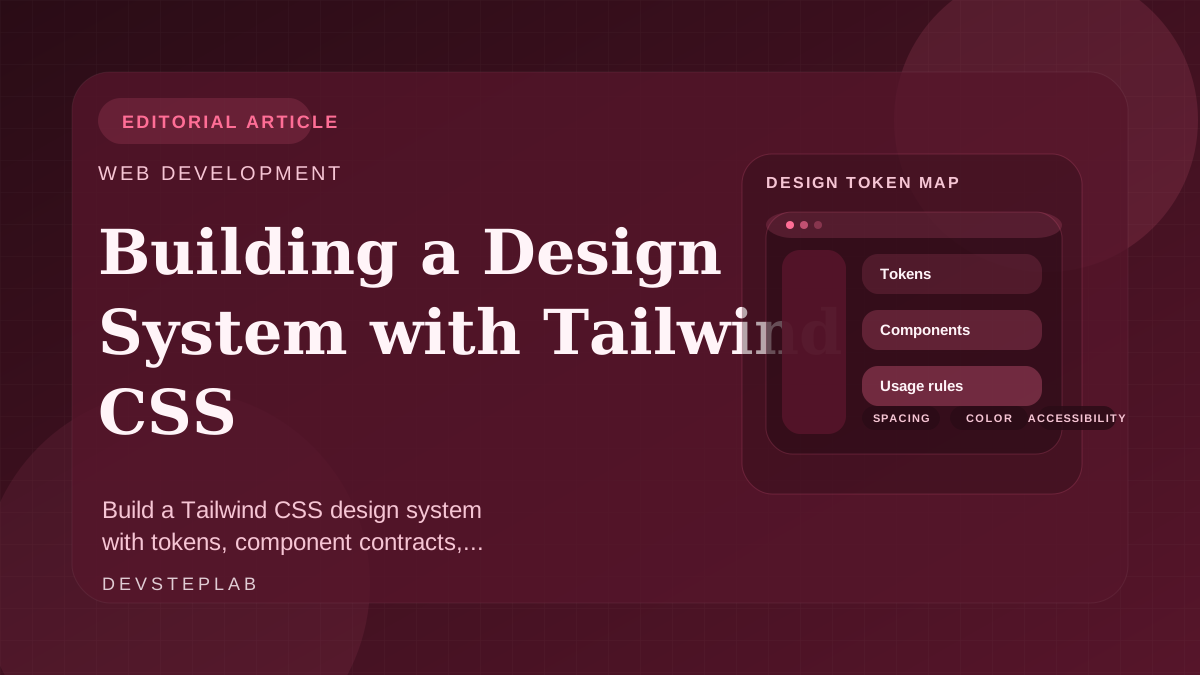
Build a Tailwind CSS design system with tokens, component contracts, and governance rules that keep teams shipping consistent interfaces.
Tailwind is useful for design-system work when it helps teams move faster without dissolving the design system into one-off utility piles. The real challenge is not whether utilities are allowed. The challenge is whether the system still has stable tokens, component boundaries, and governance.
If you are searching for how to build a Tailwind CSS design system, the real leverage comes from tokens, component contracts, and governance rules.
Start with tokens, not component screenshots
A sustainable system begins with the decisions that need to stay consistent:
- spacing scale
- type scale
- color roles
- border radius
- elevation and motion
Once those rules exist, Tailwind becomes a delivery mechanism for the system instead of a shortcut around it.
Design the component API like a product surface
Every shared component should answer three questions clearly:
- what problem it solves
- what variants are allowed
- what is intentionally out of scope
That discipline matters more than how the classes are authored. A button with a tight API is more valuable than a component that can be themed into anything and therefore guarantees nothing.
Utilities are strongest at the edge of the system
Tailwind works well when it supports:
- layout composition
- page-level adaptation
- limited local variation
It becomes dangerous when teams use arbitrary values and local overrides to dodge the system every time they hit friction. That is how a library keeps the ceremony of a design system without the consistency.
Governance decides whether the system survives
Teams usually lose the design system when no one owns:
- release rules
- token changes
- accessibility review
- naming conventions
- deprecation paths
The implementation details matter, but governance is what keeps the system useful after the first launch.
Tailwind is a means, not the strategy
A healthy Tailwind design system still needs documentation, contribution rules, and visual constraints. If you want the broader CSS architecture view, pair this article with Modern CSS Beyond Flexbox and Grid. The best systems treat utilities as one tool inside a much clearer editorial and engineering standard.
Related next reads
Frequently Asked Questions
Does a Tailwind-based design system still need tokens?
Yes. Utility classes move fast, but tokens still define the spacing, type, radius, color, and motion rules the system is built on.
Should every component in a design system be highly configurable?
No. Over-configurable components turn a design system into a style lottery. The better approach is a smaller API with clearer intended usage.