Understanding Transformers Without the Hype
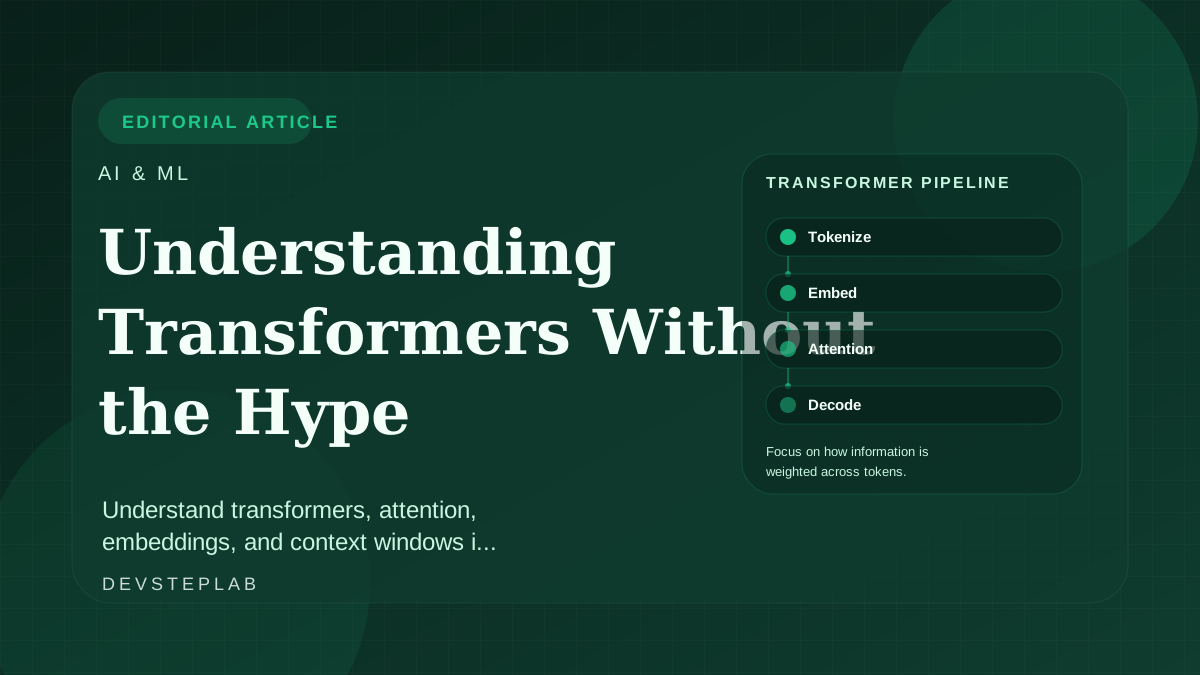
Understand transformers, attention, embeddings, and context windows in plain engineering language so you can design AI features more confidently.
Transformers feel mysterious mostly because teams meet them through product APIs instead of through the practical constraints they impose. For application engineers, the important part is not memorizing every detail of the architecture. It is understanding what the model is good at, what the context window changes, and where cost grows.
If you are learning transformers as an application engineer, start with attention, embeddings, and context limits rather than model hype.
Tokens, embeddings, and sequence matter first
Before attention even enters the conversation, developers should understand that transformer systems operate on tokenized sequences. The model sees a stream of tokens, not a magical semantic representation of your product domain.
That affects:
- prompt length
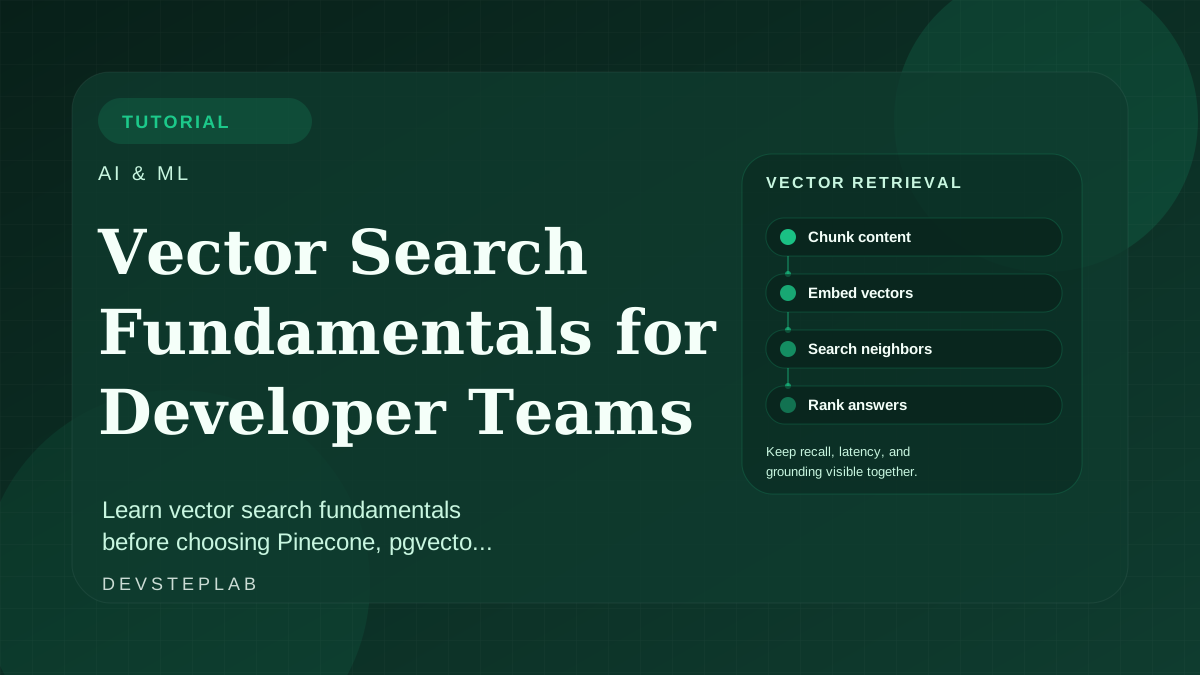
- chunking strategy
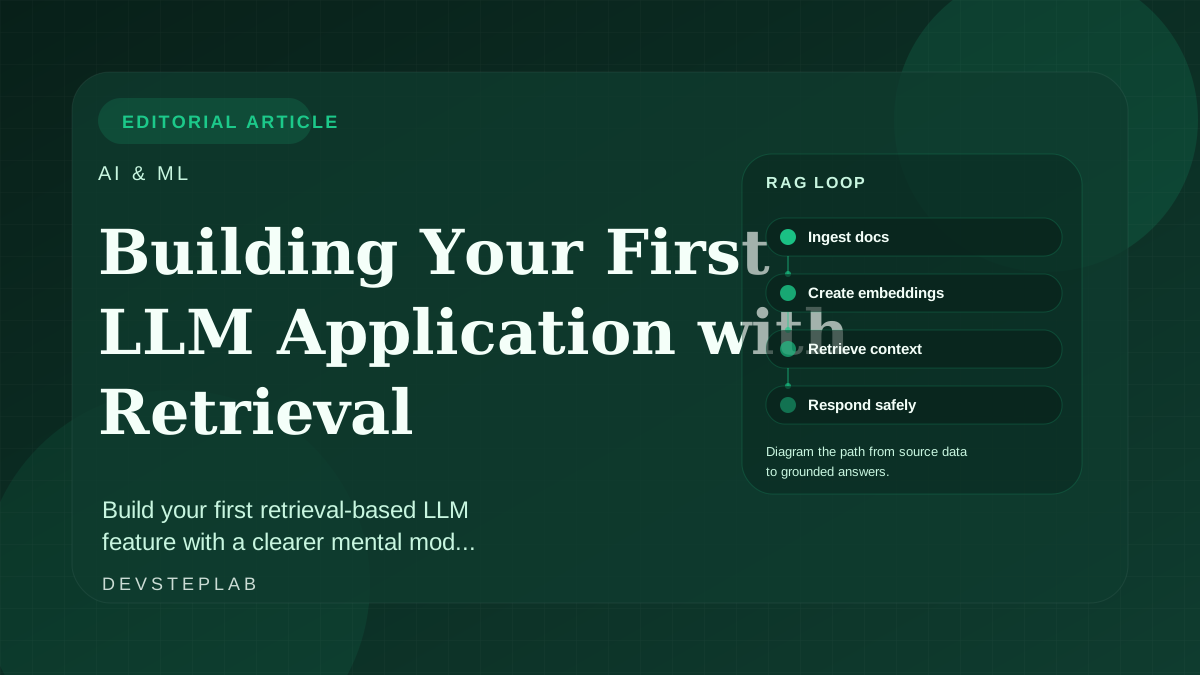
- retrieval design
- output formatting
- cost and latency
Attention explains why relevant context helps
The attention mechanism matters because it lets the model weigh relationships across the token sequence instead of only stepping through input left to right.
That is the practical reason retrieval and careful prompt composition work. You are shaping the sequence the model can attend to, not simply adding more text and hoping for the best.
Context windows are product constraints
A larger context window is useful, but it does not remove the need for system design. Longer contexts still increase:
- cost
- latency
- prompt complexity
- the risk of burying the relevant signal under too much noise
This is one reason why retrieval-focused application design often wins over brute-force prompt stuffing.
Inference tradeoffs matter in production
From a product perspective, the transformer conversation quickly becomes one of tradeoffs:
- cheaper vs stronger models
- latency vs answer quality
- retrieval depth vs cost
- local control vs managed APIs
Those are engineering choices, not research trivia.
Learn enough to reason, then build
For most software engineers, the right level of understanding is enough to:
- choose a retrieval strategy
- structure prompts responsibly
- estimate cost and latency impact
- explain failure modes to product and engineering stakeholders
Once that baseline is clear, deeper model knowledge becomes much easier to place in context.
Related next reads
Frequently Asked Questions
Do application engineers need to understand transformer math deeply?
No. You need enough understanding to reason about embeddings, attention, context windows, and inference cost, but not enough to rederive every paper before building products.
Why do context limits matter so much in product design?
Because context limits shape prompt structure, retrieval depth, latency, and cost. They are not just a model specification line item.