Designing a Scalable Notification System

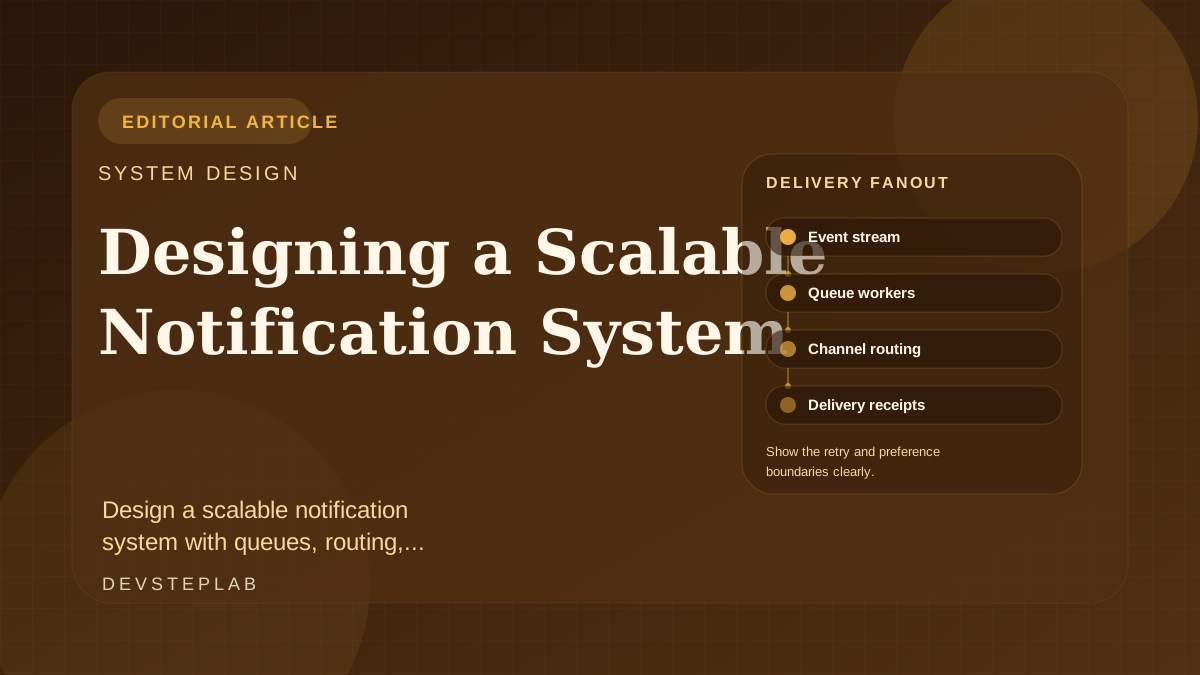
Design a scalable notification system with queues, routing, fan-out, retries, preferences, and delivery safeguards for real production traffic.
Notification systems look simple when reduced to ?send a message to a user.? They become complex when the real constraints show up: user preferences, event fan-out, retries, rate limits, delivery guarantees, and the fact that different channels fail in very different ways.
A good notification system design starts with routing rules, user preferences, retries, and failure isolation instead of channel-specific code.
Start with the event and audience model
A good system begins by defining:
- what event created the notification
- which users are eligible to receive it
- which channel policies apply
- what should happen if the message is delayed or dropped
Without that model, delivery infrastructure grows around assumptions that are never written down.
Preferences are part of the core path
Preference checks are not a side feature. They decide whether delivery should happen at all.
That means the system needs to evaluate:
- opt-in and opt-out settings
- channel eligibility
- per-event muting rules
- rate limits and digest rules
If preference logic is bolted on late, teams end up retrying work that should never have been queued.
Queueing and fan-out need explicit ownership
Large systems usually separate:
- event ingestion
- notification planning
- per-channel delivery
- status tracking
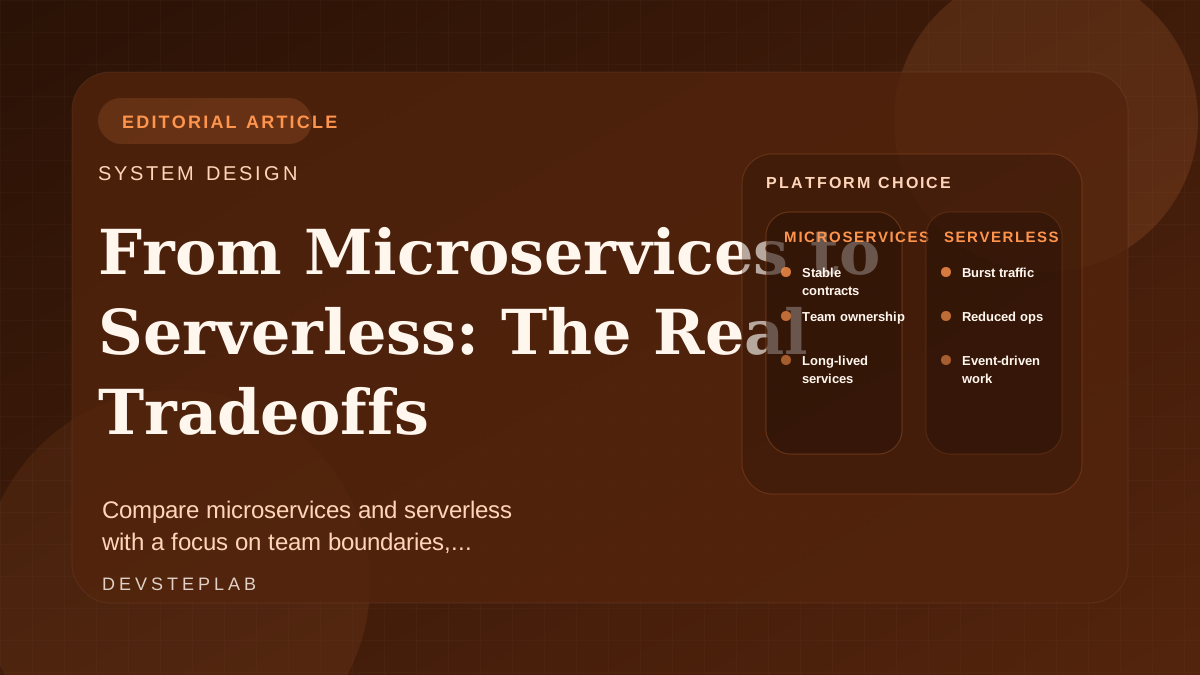
This helps when traffic spikes or one downstream provider slows down. The same principle shows up in From Microservices to Serverless: The Real Tradeoffs: clear ownership beats clever distribution.
Retries and idempotency protect the system from itself
Delivery work must assume duplication and partial failure. Good notification pipelines use:
- idempotent message identifiers
- bounded retry windows
- dead-letter handling
- observability around dropped or delayed events
Otherwise the system quietly degrades into a spam engine every time a provider or job worker misbehaves.
Measure usefulness, not only throughput
At scale, the important signals include:
- send success by channel
- time-to-delivery
- failure rate by provider
- suppression volume from preference checks
- user engagement by message type
A notification system is only scalable if it stays selective, observable, and cheap to reason about while traffic grows.
Related next reads
Frequently Asked Questions
Should one notification service handle email, push, and in-app delivery?
Usually yes at the orchestration layer, but the downstream channel adapters should stay separate enough that failure in one path does not corrupt the others.
What breaks notification systems first at scale?
Queue buildup, missing user preference logic, poor retry discipline, and weak idempotency controls usually cause trouble before raw throughput does.